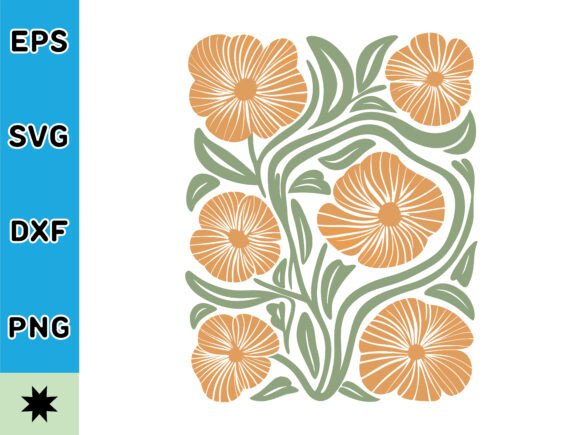
Colorful Retro Flower SVG Vector
A Designer’s First Look: Bright, Bold, and Unapologetically Nostalgic
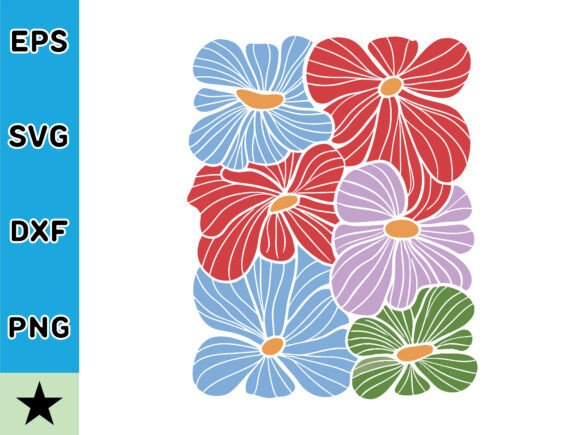
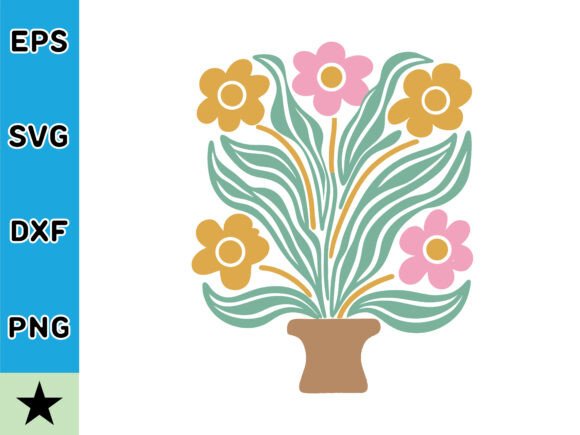
Opening Colorful Retro Flower SVG Vector feels like flipping through a well-loved 70s design book — warm yellows, saturated pinks, deep teals, and crisp white outlines all coexist with cheerful confidence. It’s not fussy or overly detailed; instead, it leans into clean, rounded petal shapes, a centered bloom with subtle asymmetry, and generous negative space between elements. As an embroidery designer who’s stitched hundreds of floral motifs, I immediately sensed its strength: this isn’t a botanical study — it’s a statement. It reads clearly at 3–4 inches wide, holds personality at 2 inches, and still reads as “flower” even when scaled down for a baby onesie collar or a cap front.
Where It Shines in Real Embroidery Projects
I recently prepped a batch of custom embroidered tote bags for a local boutique — think heavyweight canvas, medium-stretch cotton twill, and lightweight linen-blend tea towels. Colorful Retro Flower SVG Vector landed perfectly on the canvas totes: bold enough to pop without overwhelming the fabric’s texture, simple enough to stitch cleanly on slightly uneven surfaces, and vibrant enough to translate well across thread brands (I tested it in both Madeira and Sulky Rayon). On the tea towels? A little more care was needed — especially around the outer petal edges — but with light tear-away stabilizer and reduced top tension, it held shape beautifully.
It also worked surprisingly well as a sweatshirt embroidery design. The open layout avoided dense fill stitch areas that can stiffen knits, and the satin stitch outlines gave just enough definition without puckering. For baby embroidery, I resized it to 1.75" and used soft poly-cotton blend stabilizer — the result was gentle, charming, and wash-durable after three test cycles. As an embroidered patch? Yes — especially when backed with heat-seal adhesive. Its strong silhouette and balanced proportions make it ideal for iron-on or sew-on applications on denim jackets, backpacks, or aprons.
Where to Pause — Not Every Fabric or Use Case Fits Equally
This isn’t a one-size-fits-all machine embroidery design. On highly textured fabrics like bouclé or thick terry cloth, some of the finer inner lines softened during stitching — not a flaw, but a reminder to simplify or rework those details if clarity is critical. On thin or stretchy fabric (think lightweight rayon or jersey), I’d recommend digitizing adjustments: widening satin stitch borders, reducing small interior fill areas, or converting tight corners to running stitch guides. And while it’s lovely on dark fabric, avoid pairing pale yellow or mint thread directly against black without testing contrast first — what looks vivid on screen can mute under thread sheen and fabric absorption.
For curved surfaces like caps or hats, keep placement centered and avoid stretching the design over extreme contours. The outer petal curves are generous, not exaggerated — so they adapt well, but won’t magically conform to a deeply curved bill. Also, if you’re planning layered garments (like embroidery over a pocket or seam), check how the design’s bottom edge aligns with seams or folds — its retro charm comes from balance, and imbalance breaks the mood.
What This Design Says About Your Finished Product
Colorful Retro Flower SVG Vector elevates handmade product perception instantly. It reads as intentional, joyful, and confident — not generic or clip-art-like. Customers notice that. When used on personalized gifts — say, a holiday embroidery on a kitchen towel or a wedding gift pillow cover — it adds warmth and character without feeling dated. For Etsy sellers and small shop owners, it supports brand consistency: pair it with vintage-inspired typography or coordinating polka-dot backing fabric, and you’ve got a cohesive craft business collection. It also performs well in printable mockups — the vector origin means crisp scaling for digital previews, social media banners, or packaging labels.
Practical Notes Every Embroidery Designer Should Check
- Test first — Stitch a full-size version on scrap fabric matching your final project’s weight and stretch.
- Review stitch density — Especially in the center cluster. If your machine flags high density, consider simplifying inner petals or adjusting fill angle.
- Confirm hoop size — While the SVG itself scales freely, your digitized embroidery file must fit your machine’s maximum hoop dimensions. Don’t assume.
- Inspect small details — That tiny leaf curl or petal tip may vanish at small sizes. Zoom in digitally before stitching.
- Try black-and-white mockups — Helps assess value contrast and legibility before committing thread.
- Compare light vs. dark backgrounds — What works on ivory linen may disappear on navy twill unless thread colors shift intentionally.
- Use proper stabilizer — Light cutaway for knits, medium tear-away for cottons, and ultra-light for delicate linens.
- Verify licensing — Since this is listed under Graphics and Crafts, confirm whether commercial embroidery use (e.g., selling finished embroidered items) or resale of digitized files is permitted.
Final Thought: A Reliable Spark, Not a Shortcut
Colorful Retro Flower SVG Vector won’t replace thoughtful digitizing or fabric knowledge — but it does offer a strong, expressive foundation. It’s the kind of design that makes clients smile when they see the proof, that sells well at craft fairs because it feels handmade *and* intentional, and that fits naturally into a broader collection of retro-modern design assets. Whether you're building a boutique line of embroidered nursery decor, launching a small shop product series, or creating personalized gifts for holidays and milestones, this vector has earned its place in a working designer’s toolkit — not as filler, but as focus.